
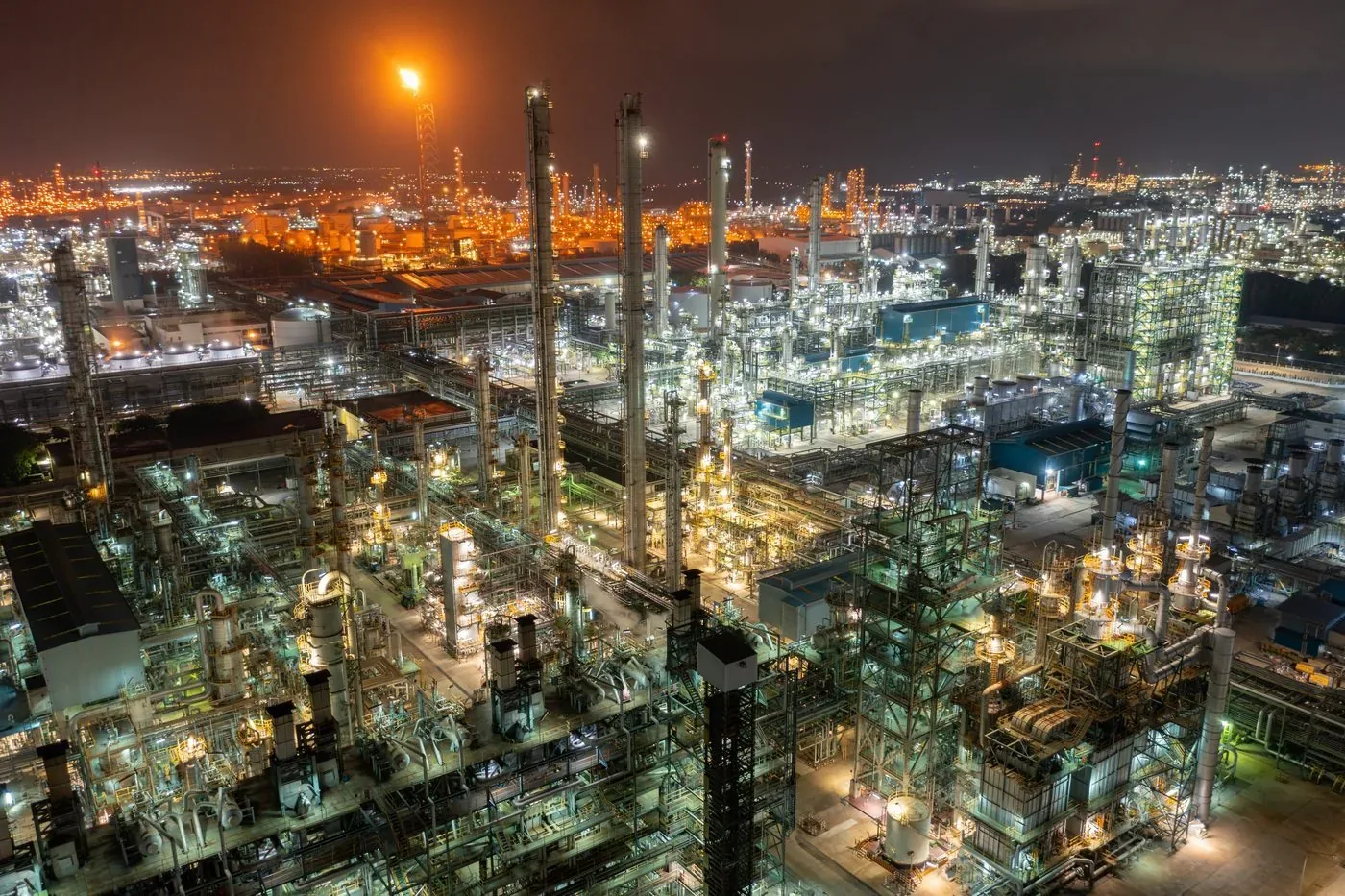
Overview
Refineries and petrochemical facilities operate large rotating equipment, heat exchangers, and process units under continuous, high-temperature, high-pressure conditions. MesoAxis examines how these systems perform against design parameters and supports efforts to improve reliability and reduce avoidable energy losses.
Refinery and petrochemical operations in Iraq run process units continuously across multi-year campaigns between major turnarounds, with pumps, compressors, heat exchangers, and furnaces operating at process-determined rates rather than at points selected for energy efficiency. Steam and electrical systems are tightly interconnected across process units, so a loss in one area — fouled heat exchangers, leaking steam traps, or distribution losses — affects the energy balance of the wider facility.
Equipment reliability in this sector is governed primarily by safety and continuous-operation requirements, with maintenance and inspection programs structured around process safety management practices. Within that framework, there is often scope to identify where rotating equipment, heat exchangers, and steam systems have drifted from their original performance envelopes without compromising the safety-driven maintenance approach already in place.
Key Challenges
- Large pumps, compressors, and fans operating continuously across process units
- Heat exchanger and furnace performance degrading over time due to fouling and wear
- High electrical and steam demand across interconnected process systems
- Equipment reliability requirements driven by safety and continuous-operation constraints
Typical Inefficiencies
- Pumps and compressors operating without speed control across variable process demand
- Heat exchangers and furnaces with reduced efficiency due to fouling or insulation losses
- Steam systems with leaks, untrapped condensate, and distribution losses
- Electrical distribution systems carrying losses across large, interconnected process areas
How MesoAxis Engages
- Energy audits covering major rotating equipment, heat exchangers, and steam systems
- Power quality and electrical assessments across process unit distribution
- Industrial process optimization to align equipment operation with process demand
- Monitoring and measurement systems for ongoing performance tracking of major equipment
- Maintenance planning for pumps, compressors, and heat transfer equipment
Example Systems Involved
- Process pumps and compressors
- Heat exchangers and furnaces
- Steam generation and distribution
- Electrical distribution and switchgear
- Cooling water systems
- Instrumentation and control systems
- Flare and relief systems