What Is an Energy Audit?
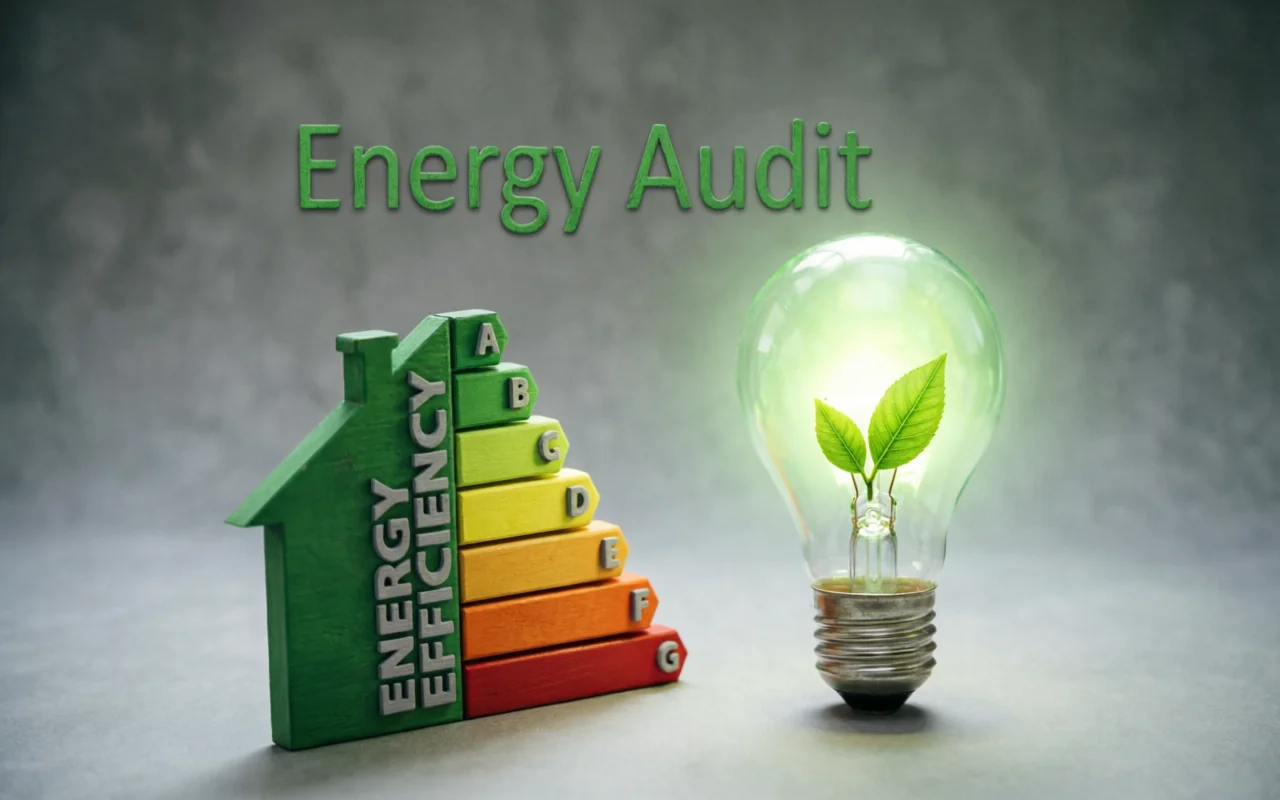
An energy audit is a methodical study of a facility's energy consumption. It examines how energy enters the site — grid electricity, on-site generation, fuel, steam, or compressed air — and how it is converted, distributed, and consumed by equipment and processes. The objective is to build an accurate picture of energy flow through the facility and identify where consumption can be reduced without compromising production, comfort, or safety.
A credible audit is not a sales visit or a checklist exercise. It combines field observation, data analysis, and engineering judgment. Depending on the depth required, it may range from a walk-through assessment that identifies obvious losses, to a detailed audit involving instrumented measurement, load logging over days or weeks, and financial analysis of each improvement opportunity.
The output is not a vague report. It is a prioritized list of findings: what is losing energy, how much it is costing, what it would take to fix, and in what order the work should be done.
Why Energy Audits Matter for Facilities in Iraq
The case for energy auditing is stronger in Iraq than in most markets, for reasons every facility manager here already knows.
Energy supply is expensive and unstable. Facilities frequently operate across grid power, private generation, and diesel generators. Diesel-generated electricity in particular carries a high cost per kilowatt-hour. When a meaningful share of a facility's energy comes from generators, every wasted kilowatt-hour costs significantly more than the utility tariff suggests — and every reduction in waste directly reduces fuel purchases.
Waste compounds quietly. A compressed air leak, an oversized motor, or a poorly controlled chiller does not announce itself. These losses run continuously, around the clock, month after month. Without measurement, they are invisible in day-to-day operations and only appear as a vaguely high energy bill that everyone has learned to accept.
Equipment is often pushed hard with limited monitoring. Many facilities in Iraq and the KRI operate older equipment, run extended hours, and have limited metering beyond the main incomer. This combination makes hidden losses both more likely and harder to detect without a deliberate assessment.
Capacity constraints are common. When generator or transformer capacity limits production, reducing wasted load is often faster and cheaper than buying more capacity. An audit frequently reveals that a facility struggling to power its operations is simultaneously wasting a portion of the energy it generates.
Where Facilities Commonly Lose Energy
Across industrial and commercial sites, energy losses tend to concentrate in recognizable areas. The specifics differ by facility, but the patterns repeat:
- Compressed air leakage. Compressed air is one of the most expensive utilities in any plant, and leakage is almost universal. Leaks at fittings, hoses, and connections force compressors to run longer and harder, often unnoticed because the system still "works."
- Oversized or poorly controlled compressors. Compressors selected for peak demand but running at partial load, or multiple units running without coordinated control, consume far more energy than the actual air demand requires.
- Inefficient motors, pumps, and fans. Motors running far below rated load, throttled pumps, dampered fans, and equipment without variable speed control all convert electricity into heat and noise rather than useful work.
- HVAC inefficiency. Cooling systems with fouled condensers, poor refrigerant management, oversized equipment, or no meaningful control strategy are a major load in Iraq's climate — often the dominant load in commercial buildings.
- Poor insulation and heat losses. Uninsulated steam lines, hot water piping, furnace surfaces, and building envelopes leak thermal energy continuously. These losses are easy to see with thermal imaging and frequently cheap to fix.
- Lighting systems. Outdated lighting technology, lighting left on in unoccupied areas, and absence of basic controls remain common, even though lighting upgrades are among the simplest improvements available.
- Process inefficiencies. Idle equipment left running, poorly sequenced operations, reheating or recooling of material, and production scheduling that ignores energy cost all add load that contributes nothing to output.
- Poor maintenance practices. Slipping belts, misaligned drives, fouled heat exchangers, blocked filters, and degraded bearings increase energy consumption long before they cause a breakdown. Energy waste is often the earliest symptom of deferred maintenance.
- Lack of monitoring and metering. Perhaps the most fundamental issue: a facility with a single meter at the incomer cannot know where its energy goes. Without sub-metering or logging, losses cannot be located, quantified, or managed.
No single facility has all of these problems. Almost every facility has several of them.
What a Proper Energy Audit Should Include
The quality of an energy audit depends on how it is conducted. A serious audit should include the following elements:
- Site walk-through. A structured inspection of the facility with operations and maintenance personnel, covering generation, distribution, major equipment, and process areas. Much can be identified by trained observation — but observation alone is not an audit.
- Utility bill and energy data review. Analysis of electricity bills, fuel purchases, generator logs, and any available consumption records to establish baseline consumption, cost structure, and load patterns over time.
- Equipment review. Assessment of major energy-consuming equipment — compressors, motors, pumps, chillers, boilers, furnaces, generators — including ratings, condition, operating practices, and control methods.
- Measurement and logging where required. Where billing data and observation are insufficient, instrumented measurement: power quality and load logging on key feeders, thermal imaging, compressed air leak detection, and spot measurements of equipment performance. Findings should rest on data, not impressions.
- Identification and quantification of losses. Each significant loss should be identified, explained, and estimated in energy and cost terms, with the basis of the estimate stated clearly. An audit that cannot say why it believes a number is not an engineering document.
- Prioritization of opportunities. Not all findings deserve equal attention. Opportunities should be ranked by cost, savings potential, implementation difficulty, and operational risk — separating quick low-cost actions from capital projects.
- Cost-benefit thinking. Every recommendation should be framed in terms a decision-maker can act on: approximate investment required, expected benefit, and indicative payback logic — stated carefully, without inflated promises.
- A practical implementation roadmap. The audit should end with a sequence of actions the facility can realistically execute, given its budget, staffing, and production constraints. A report that cannot be implemented has documented the problem and solved nothing.
An Energy Audit Is Not Only About Reducing Electricity Bills
Cost reduction is the headline benefit, but it is not the only one — and in some facilities, not even the most valuable one.
Because an energy audit examines how equipment actually operates, it routinely surfaces issues that affect reliability and production stability: overloaded feeders, power quality problems, equipment running outside its design envelope, and failure risks that have not yet matured into breakdowns. In facilities dependent on generators, audit findings often directly improve supply stability.
Audits also strengthen maintenance discipline. Energy waste and mechanical degradation are closely linked; the audit process frequently identifies maintenance gaps and provides the measurement baseline a facility needs to move from reactive repair toward planned maintenance.
There are safety dimensions as well — overheating connections, overloaded circuits, and steam or thermal hazards are commonly identified during audit fieldwork.
Finally, an audit improves asset performance and visibility. It gives management a documented, quantified understanding of how the facility actually runs, which becomes the foundation for monitoring, automation, and longer-term performance improvement.
The MesoAxis Approach
MesoAxis operates as Iraq's only dedicated energy audit company, but its scope is deliberately broader than auditing alone — because an audit that ends with a report has limited value.
The MesoAxis approach connects audit findings to execution. Audit results feed directly into the company's related service families: engineering support for design and implementation of improvements; maintenance planning and CMMS readiness to address the maintenance-related losses an audit reveals; automation, controls, and IIoT to give facilities the monitoring and metering capability that makes energy manageable over time; and technical material and equipment supply for the hardware that implementation requires.
In practice, this means a facility working with MesoAxis is not handed a document and left to interpret it. Findings are translated into specified, sequenced, implementable actions — and where the facility wants support executing them, that support is available from the same engineering team that performed the audit.
Who Needs an Energy Audit?
Any facility with a significant energy bill and limited visibility into where that energy goes is a candidate. In Iraq and the KRI, this typically includes the industries we serve:
- Manufacturing plants of all types, particularly those with compressed air, motor-driven equipment, and multi-shift operation
- Cement, concrete, and block plants, where grinding, crushing, and material handling create heavy electrical loads
- Steel and metalworking facilities, with furnaces, large motors, and high-intensity processes
- Commercial and residential buildings, where HVAC and lighting dominate consumption
- Food and beverage facilities, with refrigeration, steam, and continuous process loads
- Oil and gas support facilities, including workshops, camps, and processing support sites
- Power generation facilities, where auxiliary consumption and operating efficiency directly affect output economics
If a facility relies heavily on diesel generation, has never sub-metered its loads, or has accepted a high energy bill as "normal," an audit is almost certainly worth its cost.
Conclusion
Energy waste in Iraqi facilities is rarely a single dramatic problem. It is an accumulation of leaks, oversized equipment, missing controls, deferred maintenance, and absent measurement — losses that persist because no one has systematically looked for them.
An energy audit is the structured way to look. Done properly, it replaces assumptions with measured findings and produces a prioritized, practical plan a facility can act on at its own pace.
For facilities in Iraq and the Kurdistan Region seeking a structured way to understand their energy losses and improve performance, MesoAxis provides an engineering-led starting point — beginning with an assessment scoped to the facility's size, operations, and objectives.